
Artificial Intelligence is evolving fast. You’ve probably heard terms like Generative AI, AI Agents, and Agentic AI being used everywhere – but what do they actually mean?
In this blog, we’ll explain these concepts in simple language, with real-life examples, so anyone can understand how modern AI is moving from answering questions to taking actions on its own.
What is Generative AI?
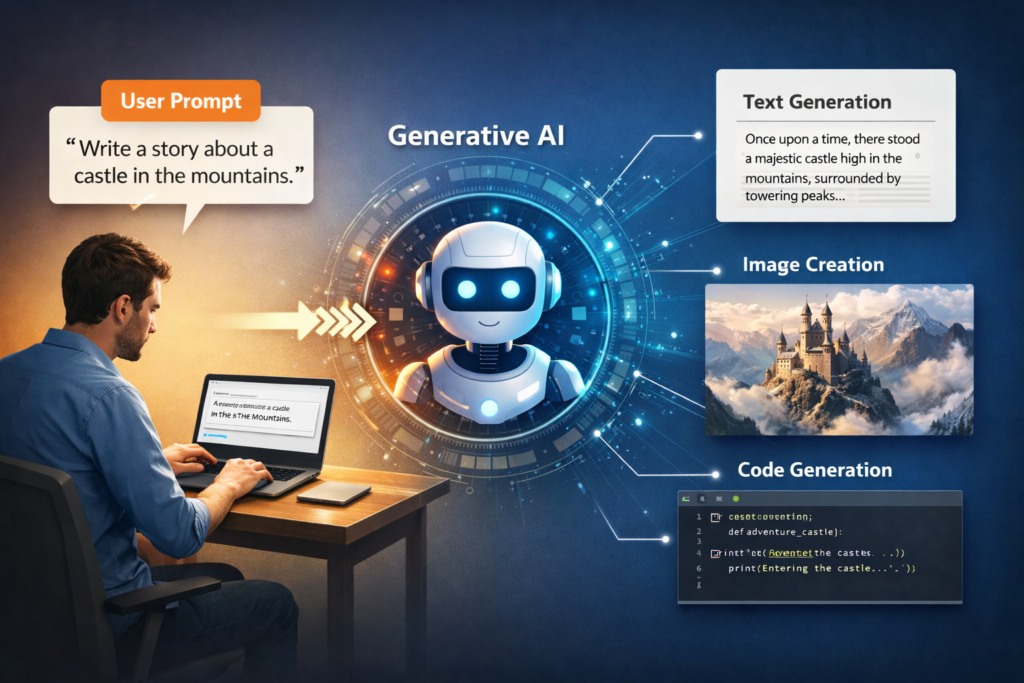
Generative AI (Gen AI) is a type of artificial intelligence that can create new content – like text, images, music, or code based on patterns it has learned from data.
Instead of just analyzing information, it generates something new.
Examples of Generative AI
- ChatGPT writing emails or blog posts
- DALL·E creating images from text prompts
- AI tools generating code snippets
- Music AI composing songs
Simple Definition
Generative AI = AI that creates content
Real-Life Analogy
Think of Generative AI as a very smart assistant who can write, draw, or compose when you give instructions – but it still waits for you to tell it what to do.
What is an AI Agent?
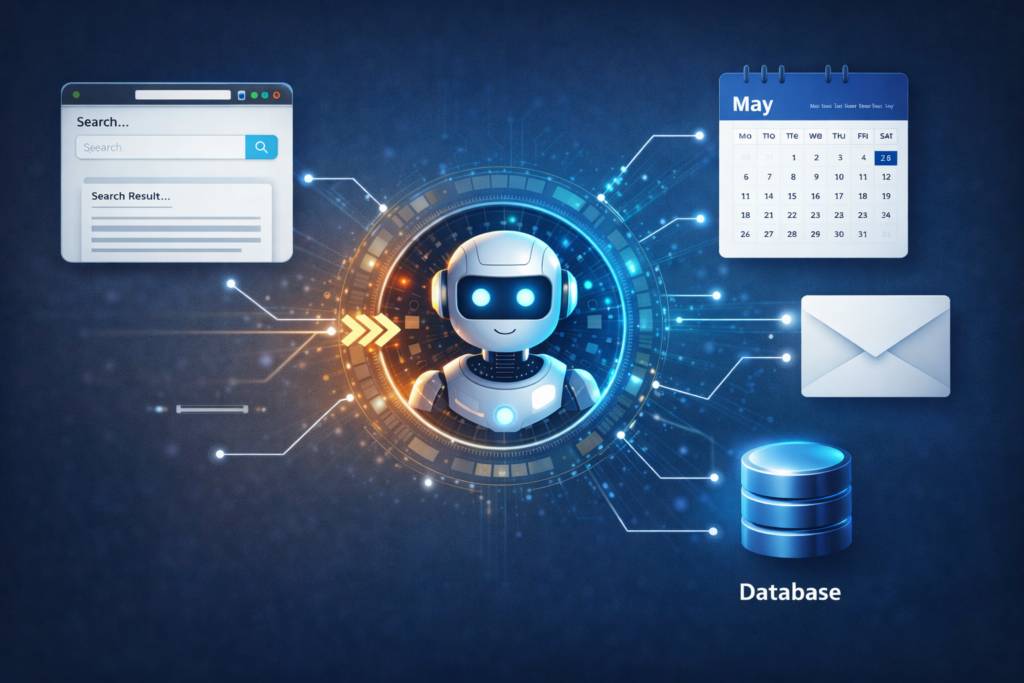
An AI Agent is an AI system that doesn’t just generate content – it can also take actions to achieve a goal.
It can:
✔ Understand instructions
✔ Make decisions
✔ Use tools (like APIs, browsers, databases)
✔ Complete tasks step by step
Examples of AI Agents
- A travel booking AI that searches flights and books tickets
- A customer support bot that checks order status and updates tickets
- A coding agent that writes, tests, and fixes code
Simple Definition
AI Agent = AI that can think + decide + act
Real-Life Analogy
If Generative AI is a writer, an AI Agent is a personal assistant who can:
- Read your request
- Search for information
- Fill forms
- Send emails
All without you guiding every single step.
What is Agentic AI?
Now comes the next level.
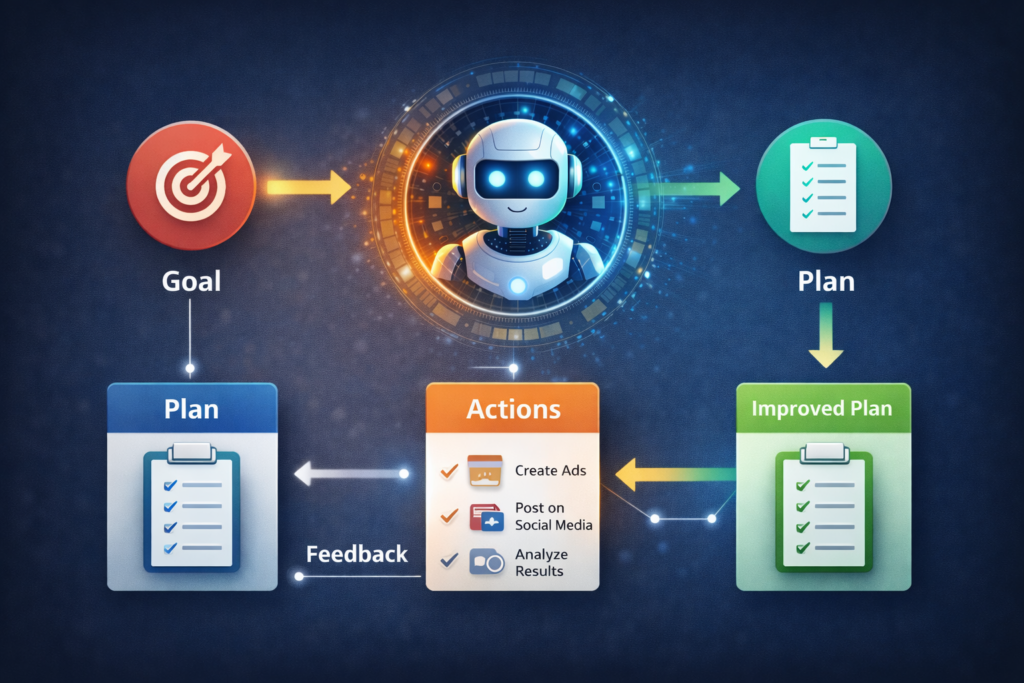
Agentic AI refers to AI systems that behave more like independent problem-solvers. They don’t just follow instructions – they can plan, adapt, and work toward goals autonomously.
This is where AI starts acting less like a tool and more like a digital co-worker.
What Makes AI “Agentic”?
Agentic AI systems can:
- Set sub-goals on their own
- Decide the best steps to reach an objective
- Adjust when something fails
- Work with minimal human input
Example of Agentic AI
Imagine you say:
“Launch a marketing campaign for my new product.”
An Agentic AI system could:
- Research the target audience
- Create ad copy and visuals
- Schedule social media posts
- Run ads
- Monitor performance
- Adjust the campaign automatically
You gave one goal. The AI handled the entire workflow.
Simple Definition
Agentic AI = AI that can plan, decide, and act independently to achieve goals
Key Differences at a Glance
| Feature | Generative AI | AI Agent | Agentic AI |
|---|---|---|---|
| Creates content | ✅ | ✅ | ✅ |
| Takes actions | ❌ | ✅ | ✅ |
| Uses external tools | ❌ | ✅ | ✅ |
| Follows step-by-step instructions | ✅ | ✅ | ❌ (can plan itself) |
| Works toward goals independently | ❌ | Limited | ✅ |
How They Work Together
These technologies are not competitors – they build on each other.
- Generative AI is the brain for creating content
- AI Agents add the ability to take actions
- Agentic AI adds autonomy and long-term planning
👉 Think of it like this:
Generative AI → AI Agent → Agentic AI
Content → Actions → Independent Goal Achievement
Why This Matters for the Future
We are moving from AI that simply responds to AI that can execute.
Soon, AI systems will:
- Manage projects
- Run marketing campaigns
- Monitor IT systems
- Optimize business processes
All with minimal human supervision.
This shift toward Agentic AI is what will power the next wave of digital transformation.
Key Takeaways: Generative AI vs AI Agents vs Agentic AI
Let’s sum it up simply:
- Generative AI creates
- AI Agents act
- Agentic AI plans and works independently
Understanding this evolution helps you stay ahead in a world where AI is becoming not just a tool – but a collaborator.

Kaustubh Pandey is the creator of Evolora, a technology professional with a strong interest in modern software systems, cloud platforms, and continuous learning.
Evolora was created as a personal knowledge-sharing initiative to document learning, explore new technologies, and present technical concepts in a simple and practical manner.
Through Evolora, the aim is to create helpful, meaningful content that supports learning and understanding in the ever-changing world of technology.
Leave a Reply